Celebration of Life vs Traditional Funeral — What's the Difference?
More and more families are choosing a celebration of life over a traditional funeral. And when someone says, "Mum wouldn't want anything sad," or "He'd hate a stuffy church service," what they're really saying is: we want this to feel like them.
Both are beautiful ways to farewell someone and neither is more loving or more respectful than the other. But they are different, and those differences shape everything from the venue to the music to what you hand people when they walk in the door.
What Makes a Traditional Funeral Different?
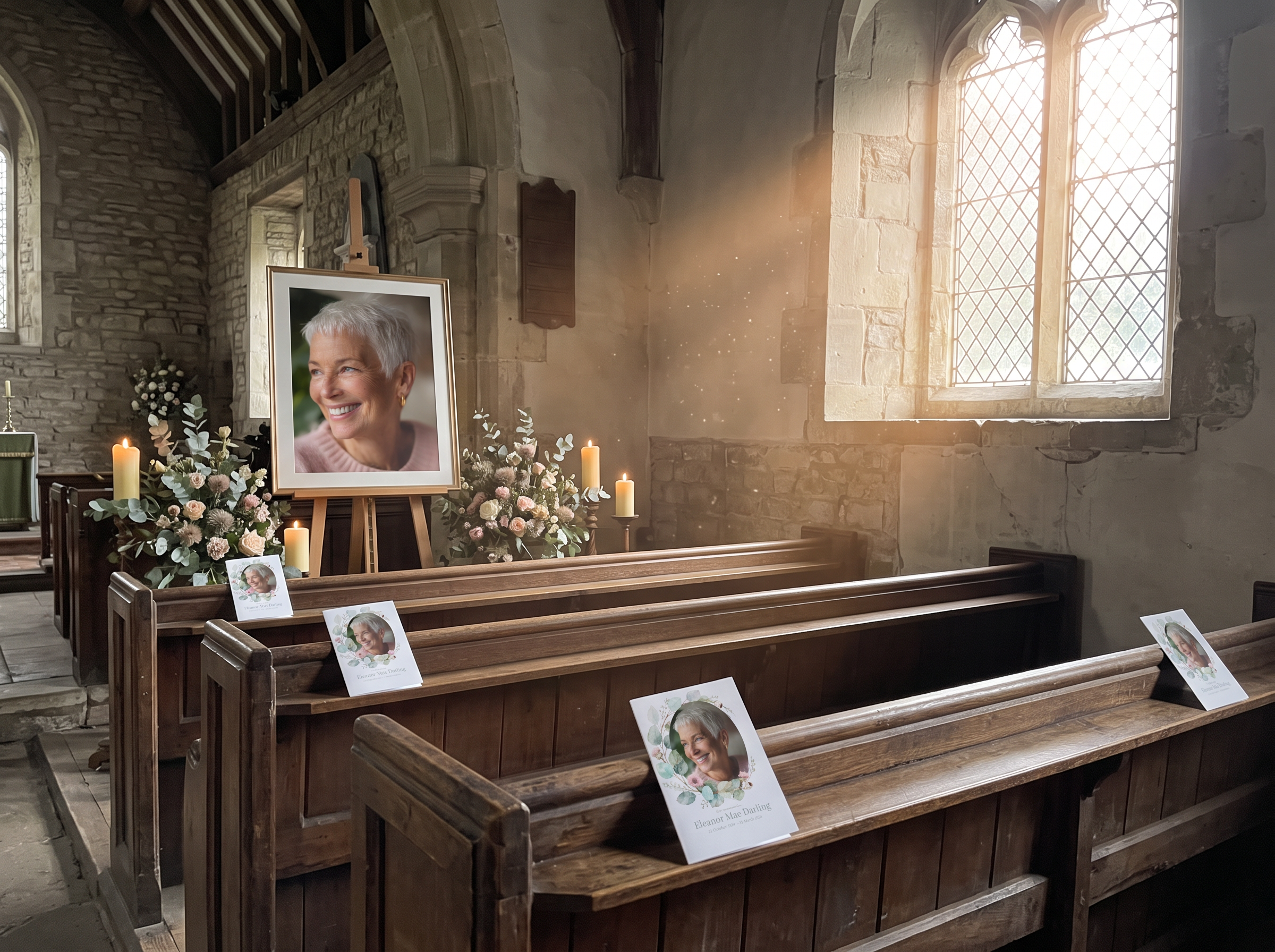
A traditional funeral is exactly what you would expect, a service that takes place in a chapel or a church with a minister or celebrant leading the service. Your loved one at the front, hymns, prayers and readings all directed their way. At the conclusion of the services there is usually a procession exiting the building towards the committal at the cemetery or crematorium to pay your final respects.
The tone is often reverent and measured. The comfort is in the ritual, especially for families who have a faith tradition or who simply find the formality grounding during such an overwhelming time. The stationery reflects the occasion: words to the hymns, the order of proceedings, a quiet structure that tells people what comes next so they don't have to wonder.
There's nothing wrong with traditional. For a lot of families, the predictability of it is a kindness. You don't have to make a hundred creative decisions when you can barely think straight.
⸻
What Makes a Celebration of Life Different?
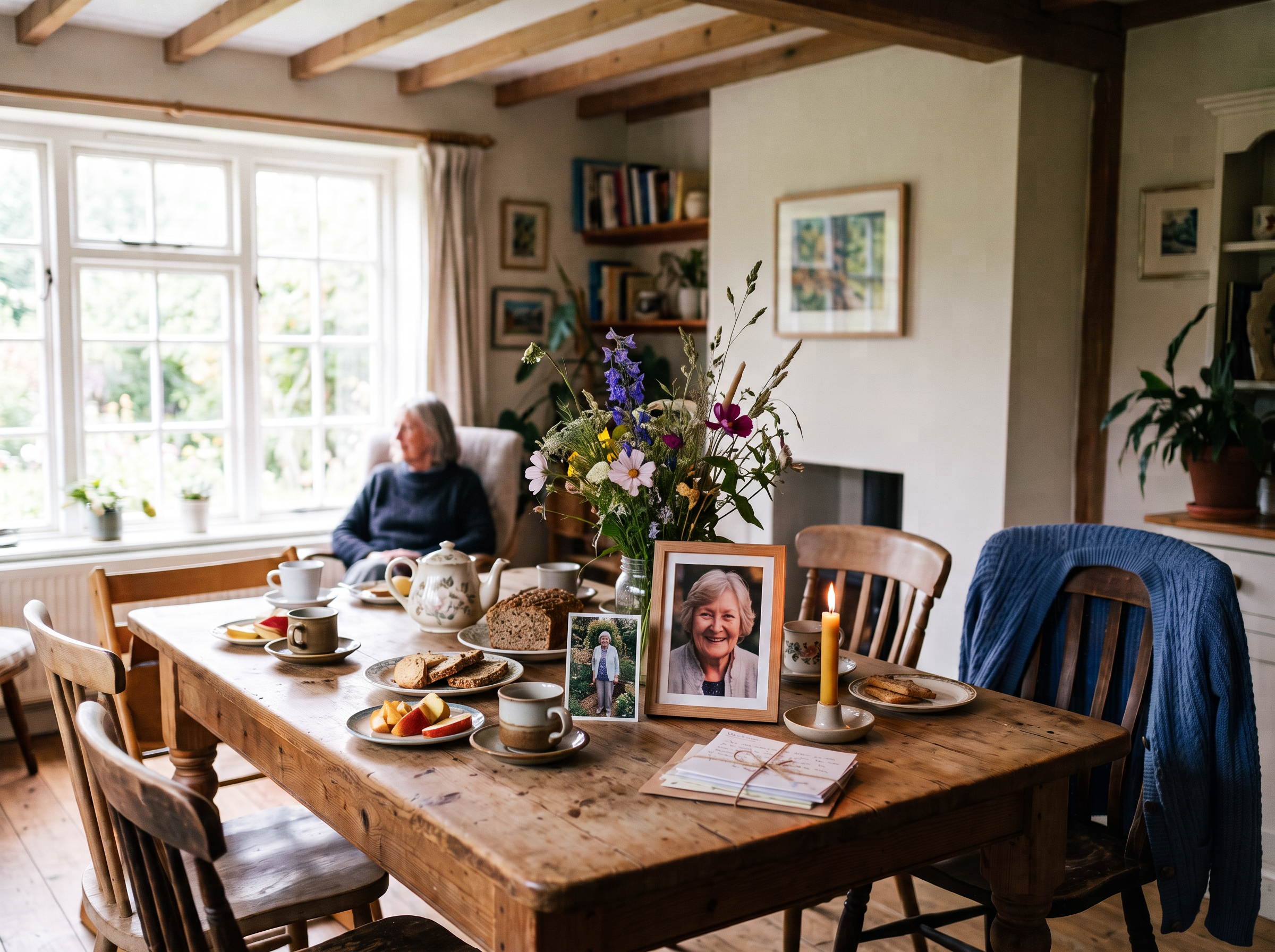
A celebration of life is less about ceremony and more about the person. It can happen anywhere: a pub, a park, someone's backyard, a surf club, a woolshed. There's no set format and often no structured program. Some have a structured program but others feel more like a gathering where people share stories as they come.
The music is a reflection of the life live and the atmosphere is often more relaxed. You may have a slideshow with photos and videos showing their life across the years, accompanied by a memorial card or memory book.
The tone says "remember who they were" rather than "mourn who we've lost." And the stationery shifts to match. Colour comes in. The language loosens up. The booklet might feel more like something you'd keep on a shelf than tuck into a hymn book.
⸻
Can You Have Both?
Absolutely. And most families do, whether they realise it or not.
A traditional service with a personal eulogy and their favourite songs woven through it. A celebration of life that still has a quiet moment of reflection or a reading that carries weight. Very few farewells sit purely at one end.
The question isn't "which type is right?" It's "what balance feels like the person we're honouring?"
⸻
How It Changes the Stationery
This is the part most people don't think about until they're staring at a template that doesn't feel right.
A traditional service booklet doesn’t have to be static or impersonal, it will have a structured layout but you can create a sense of personality through design elements. These booklets guide people through the order of proceedings clearly and quietly, but it can also still feel like a beautiful final moment.
A celebration of life booklet can be bolder, less formal, with more room for photographs and stories. It can break the rules a little, because the service itself is breaking the rules a little.
I've designed booklets with watercolour florals and booklets with a photo of someone's dad on his tractor. Both were exactly right, because they were exactly that person.
The keepsake should feel like the farewell, and no two farewells are the same.
⸻
Not Sure Which Direction Feels Right?
That's completely normal. Most families have a gut sense of what the person would have wanted but aren't sure how to translate that into a plan. Sometimes it helps to start with one question: if they could see their own farewell, would they want people sitting quietly or telling stories over a beer?
The answer usually points you in the right direction. And everything else, the venue, the music, the stationery, follows from there.
If you're in the middle of planning right now and you'd like help creating stationery that matches the spirit of your service, whatever that looks like, you're welcome to get in touch.
You might also find these helpful:
There's no rush, and no pressure. Just a conversation whenever you're ready