How to Choose Photos for a Funeral
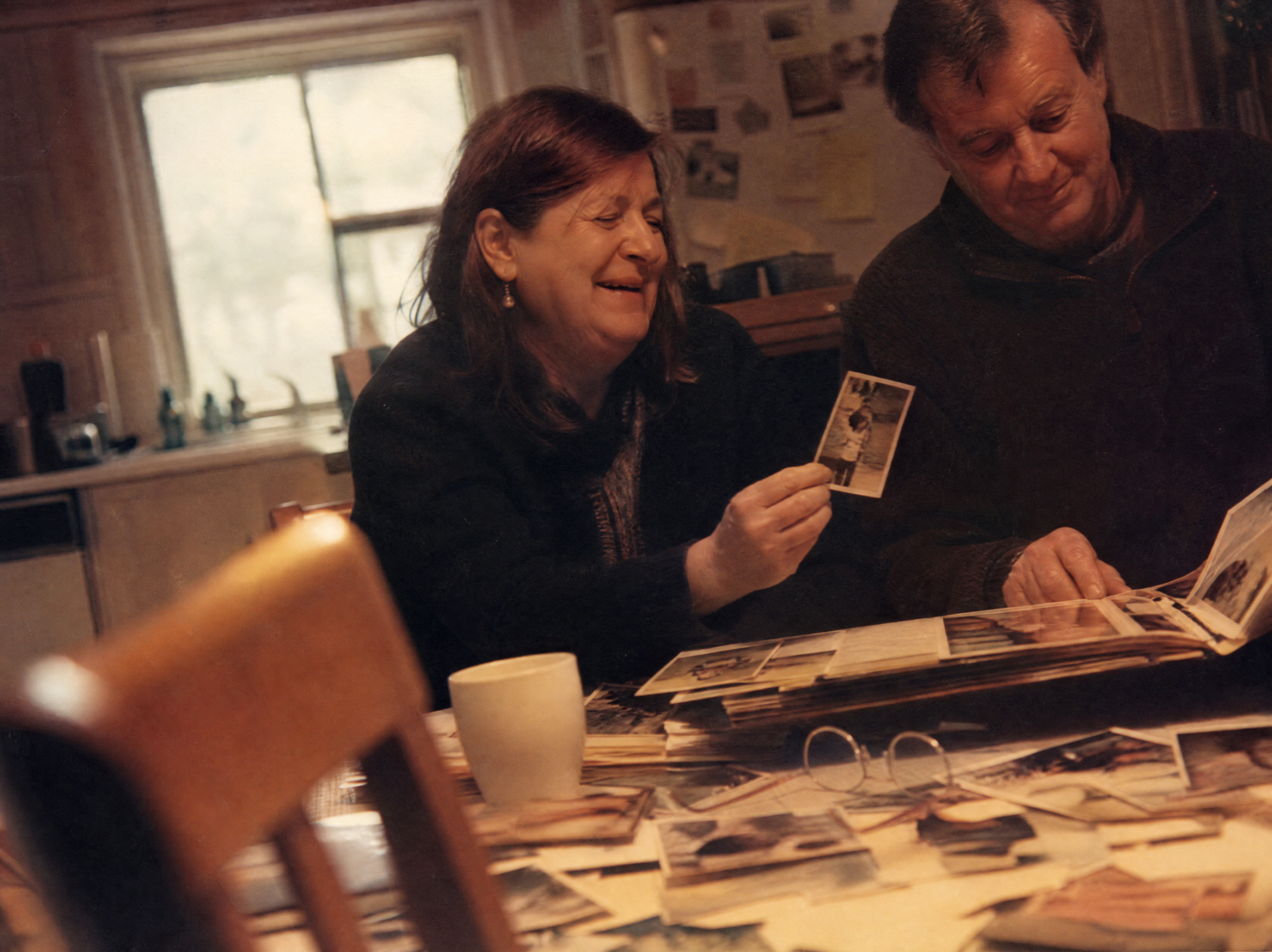
Here's a job nobody warns you about: sitting down with a phone full of photos, a few days out from the service, and being asked to somehow sum up a whole person in a handful of images. And the strange part is that the longer you look, the harder it gets. Every picture holds something. Choosing feels almost disloyal.
So let me make it lighter. After fifteen years of doing this, the families who find this part easiest have one thing in common. They stop hunting for the perfect photo. They look for the one that actually looks like their person, and that's a much kinder thing to search for.
Don't skip the old albums
Before you disappear into the camera roll, go and find the boxes. The photo albums that have sat at the back of a cupboard for years, a little dusty, full of a life you were only ever part of some of. You'll turn pages and find people you can't name, moments you weren't there for, whole chapters that belonged to them long before they belonged to you.
Give yourself time for this part. It's slow, and it's meant to be. You'll remember the good times, and some of the harder ones too. But there's a quiet reverence in it, a sense that while you're sitting there with their photos in your lap, they're somehow still with you. It will probably bring you to tears. Not always the bad kind.
Some of the most treasured images I've ever placed in a booklet came out of exactly this. A print nobody had looked at in thirty years, found at the bottom of a box.
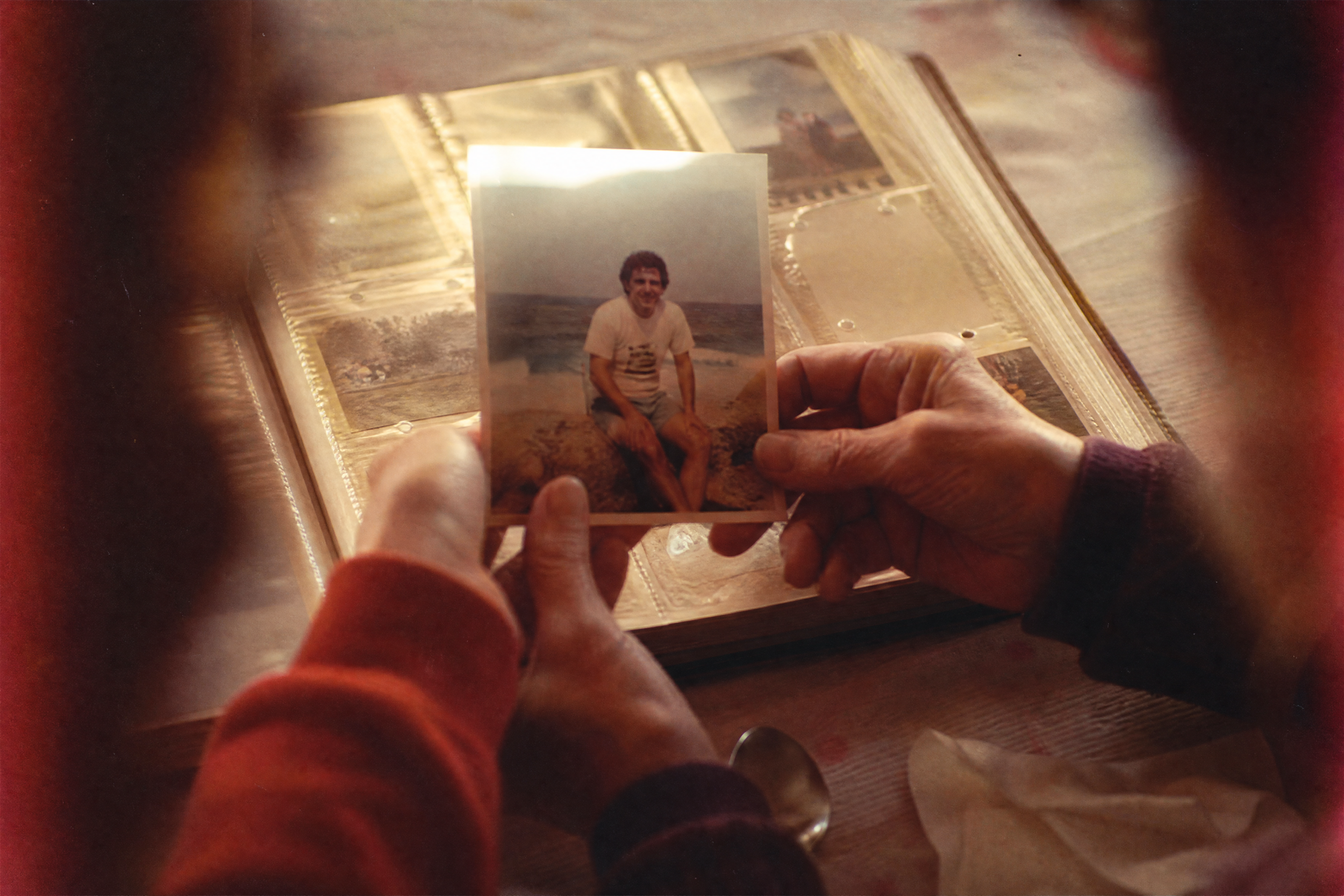
The cover photo
The front of an order of service usually carries one main image, and it's the one families tend to agonise over most. Here's what's worth knowing before you start: the most flattering photo and the right photo are often not the same photo.
You're looking for the one where family take a breath and go "oh, that's them." Sometimes that's a lovely studio portrait. Just as often it's a slightly wonky snap from a backyard barbecue, mid-laugh, cup of tea in hand. The camera quality matters far less than the face. A real expression will always do more than a polished photo that somehow looks like a stranger.
Photos for the order of service booklet
If your booklet has room for more than the cover, you still don't need many. A few chosen with care say more than a crowded page ever could. What I usually look for is a gentle spread across a life:
One from when they were young, before most of us knew them
One from their prime, doing the thing they loved
One with the people who mattered most
One from more recent years, so the room recognises them
Four or five photos across a whole life tell a richer story than twenty from the same decade. And don't worry about a faded edge on an old print or a bit of grain in a photo from the seventies. That's part of the charm, not something to apologise for.
Photos for a memory book
A memory book is a different thing entirely, and this is where all those albums truly earn their place. Instead of a few careful choices, a memory book has room for the whole story, usually somewhere between fifty and a hundred photos across a life. You're not hunting for one perfect image anymore. You're gathering the sweep of it: the childhood years, the working life, the holidays, the weddings, the quiet everyday moments in between.
This is the home for all the pictures that didn't make the booklet but you couldn't bear to leave behind. If you've been through the boxes, you'll likely have more than enough, and that's exactly how it should be. We can shape them into something that reads like a life, rather than a pile of photos in no particular order.
Photos for a slideshow
A photo tribute is the one place where more really is better, because the whole point is to let people wander through a life. Here you want range. Childhood, work, holidays, the wedding, the grandkids, and just as importantly the ordinary Tuesdays. The candid shots, the ones where nobody knew the camera was there, tend to be the ones that get the biggest reaction in the room. Those are the moments people recognise.
A good number to aim for is somewhere between sixty and ninety images for a five to eight minute presentation. If choosing that many feels like too much right now, this is exactly the kind of thing I can help with. You send me what you have, and we shape it together.
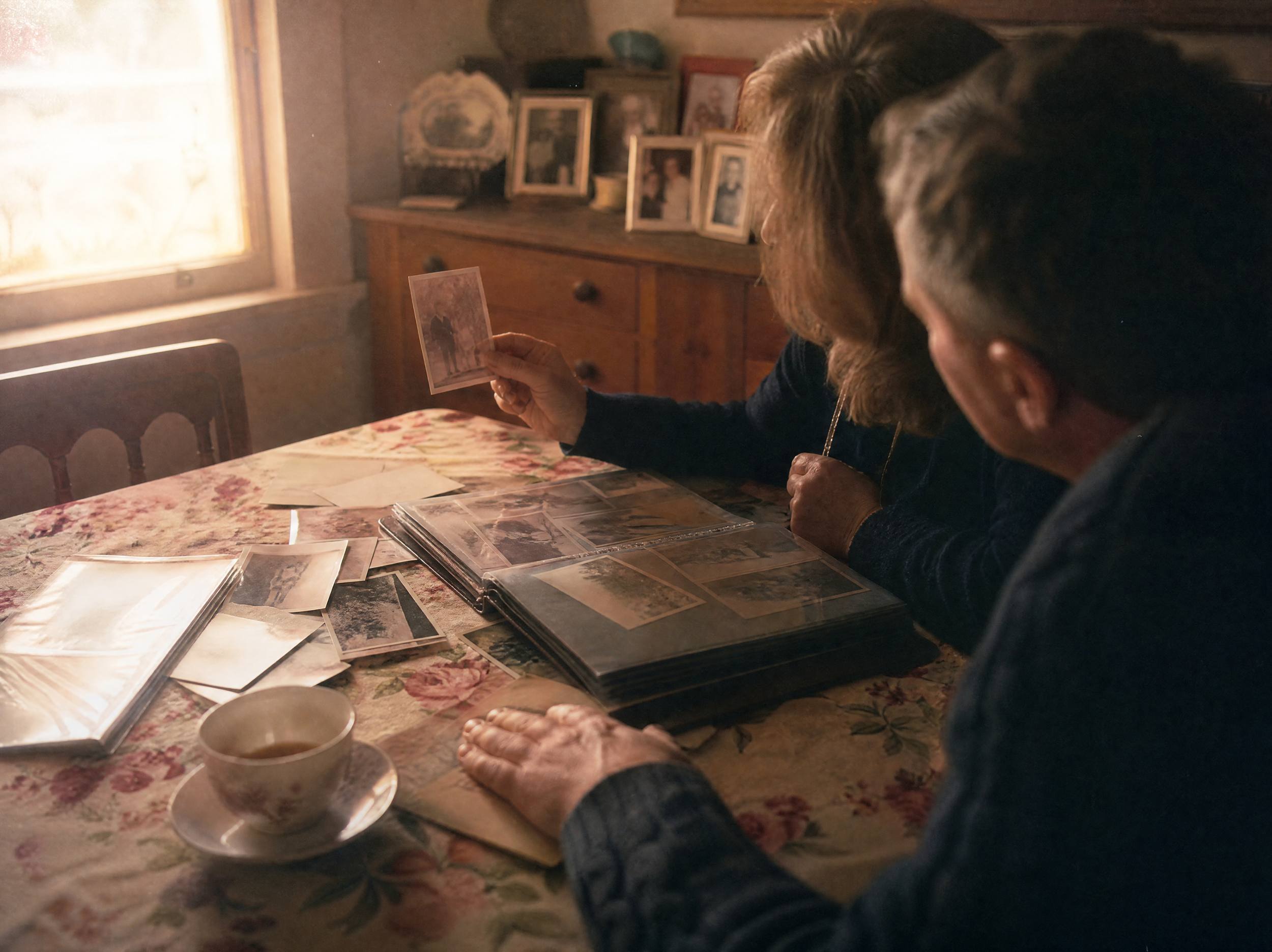
The practical bit nobody mentions
A few things that quietly cause stress on print day, so you can sidestep them:
Resolution matters for print. A photo that looks fine on your phone can come out blurry when it's printed larger. Rough guide: if you can zoom right in on screen and it still looks fairly sharp, it'll usually print well. When in doubt, send the biggest version you can find, and send the original rather than a screenshot of it.
Old prints can be scanned. If a treasure from one of those albums only exists on paper, don't rule it out. A decent phone scan in good light often works, and most print shops can scan properly if you want the best result. A photo being old is never a reason to leave it out.
Screenshots and social media downloads lose quality. If the only copy you can find is on Facebook, that's okay, we can often work with it. But the original from a camera or phone will always look better, so it's worth a quick ask around before you settle.
Ask the wider family early. The photo you're picturing is often on someone else's phone, or in a shoebox at an aunt's house. A quick group message asking everyone to send their favourites will surprise you, and it means you're not the only one carrying the decision.
A word on the imperfect ones
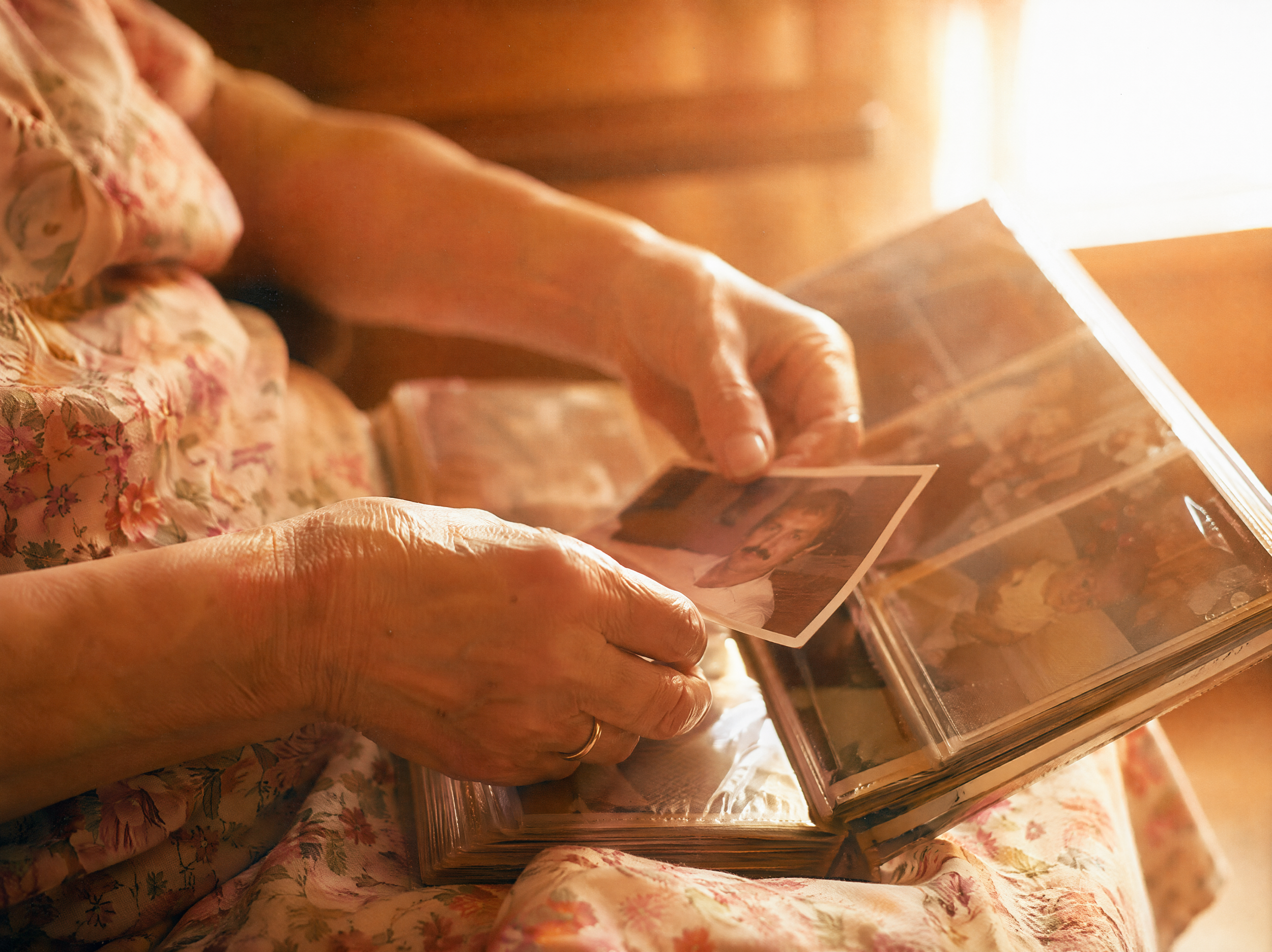
I'll say this gently, because it catches a lot of families out. The instinct is to reach for the dressed-up photos, the ones where everyone looked their best. But the images that tend to bring the most comfort are the honest ones. The bad-haircut era. The daggy jumper they refused to throw out. The blurry one taken mid-laugh at Christmas. Those are the photos that make people go "oh, that's so them," and that flicker of recognition is worth more than any amount of polish.
You don't have to do this part on your own
If you're staring at a camera roll, or sitting on the floor surrounded by open albums, feeling stuck, that's normal. It's genuinely the part I'm here to take off your hands. Whether it's a booklet, a memory book or a slideshow, send me more than you think you need and we'll choose what fits together. Nothing has to be decided alone at the kitchen table.